Flamenco dance shoes: Everything you need to know before you buy
When it comes to buying flamenco shoes, I’ve made all the mistakes…
I’ve paid more attention to how they looked than how they felt. I’ve bought them too tight. I’ve bought them too loose (but that worked out in my favour as I have bigger feet after having kids).
It took me way too long to realise that a good pair of flamenco shoes is an investment in your feet AND the quality of your dancing. After all, shoes are like an instrument for a flamenco dancer.
I’ve bought secondhand shoes in Australia, brand new ones in Madrid on my first trip there in 2008, and several pairs in Seville over the four years I lived there.
Here’s everything I’ve learnt about flamenco shoes so you don’t make the same mistakes as I did.
What to look for in a flamenco shoe
You dance flamenco so you need… a flamenco shoe!
It sounds obvious. But, buyer beware! A quick Google search for ‘flamenco shoes’ brings up products that aren’t fit for the job.
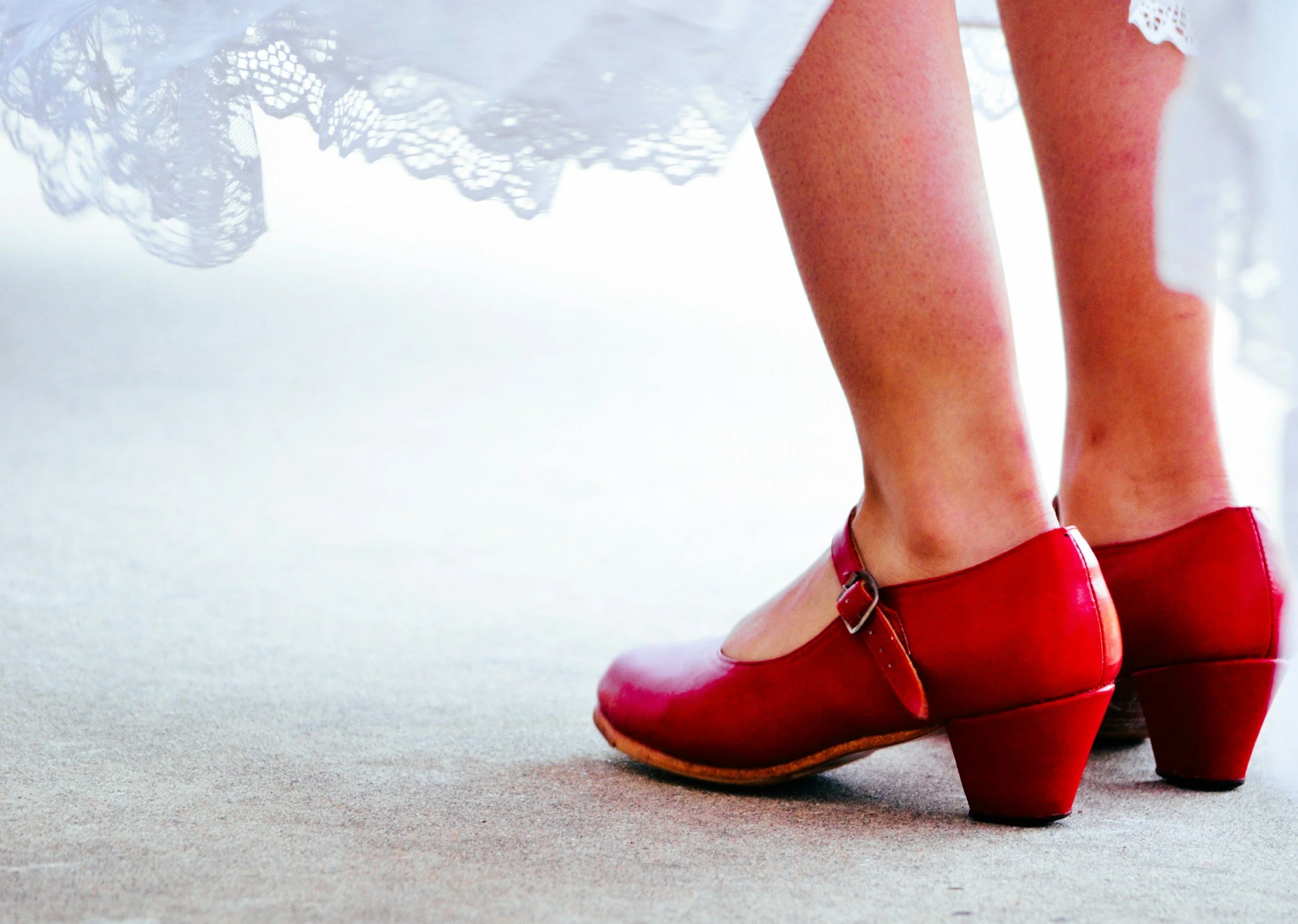
A flamenco shoe is a sturdy dance shoe with a solid heel, a non-slip sole, and nails on both the heel and toe areas for a percussive sound.
Steer clear of ‘character shoes’ or ‘folkloric shoes’ that might have the same shape but are costume wear. Likewise ‘zapatos de flamenca’ with an ‘a’ rather than an ‘o’ at the end are dress shoes and won’t have have the nails necessary for flamenco dance.
Is more expensive better?
Flamenco shoes are sold under two categories: Professional and Semi-professional. The name says it all. If you’re a committed dancer and you want to get the most out of your shoes, professional shoes are the best choice.
A more expensive shoe will:
be made of better quality leather.
have more nails, which have been filed for smoothness and improved sound.
have leather soles and stitching on the soles for reinforcement.
last longer and feel more comfortable thanks to all of the above.
If you’re taking one dance class a week then a semi-professional shoe is a good choice. It might have a rubber sole without stitching, but it can still be a really well-made shoe.
Whatever you go for, check that the shoes have nails in the toe and heel. No nails means they’re not real flamenco shoes. It’s very hard to get a good sound without nails.
Leather or suede?
Once you’ve decided how much you want to spend and whether or not to get a professional or semi-professional shoe, the choices get more interesting!
Step one: the shoe material. Will you go for leather or suede?
Cheaper shoes are made from synthetic materials but leather and suede still dominate the world of flamenco.
Suede is appealing. Personally I love the look. Plus it softens to the foot more quickly. But…leather is stronger, easy to clean, and will last longer.
If you’re lucky enough to have multiple pairs you can keep a leather pair for technique and save a suede pair for occasional classes and performance.
Your choice of colours
Colour is where most people start. Myself included.
Colour is what draws our eye to a flamenco shoe. Shoe makers know this because the window display in a flamenco shoe store is a rainbow.
I’m not going to tell you to steer clear of sparkly fuchsia with rose piping and matching laces. If it’s your second pair of shoes then go for it. But… a basic black pair is a good place to start.
Keep it mind that black works for all palos (flamenco styles). You may feel bright and airy dancing Alegrías in pink, but you’ll want a more sombre look next term when you do a Soleá choreography.
Don’t let that stop you though. Professional flamenco shoes are not cheap and there’s a lot of joy to be had in choosing the colour, pattern or design that makes you happy.
Laces or buckles?
It seems like a simple choice, doesn’t it?
Some people swear by lace-up shoes and others love a buckle. I’ve been on both sides at various points. Now I think it’s a question of comfort. (Although it does affect the style too, as shoes with a simple buckle strap do leave more skin exposed.)
Laces give you more control over the tightness of the shoe. But… they can break.
A buckle on a leather strap is stronger. But… the holes are at fixed intervals and might feel too tight or loose.
The one thing we can all agree on is no elastic. It won’t hold the shoe in place and give you security for dancing.
Pay attention to the heels
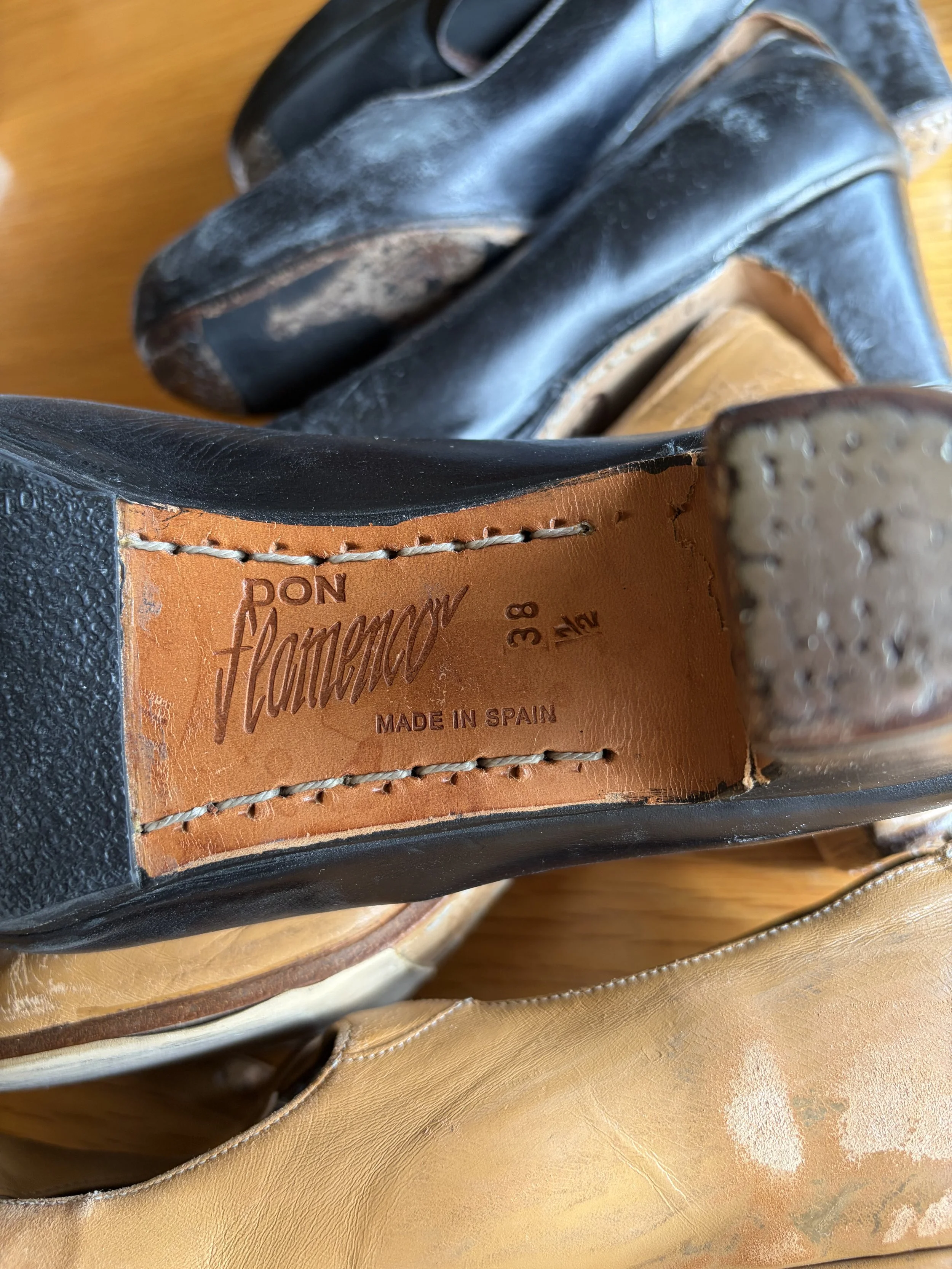
Stitching on the sole holds it in place after lots of wear and tear
All flamenco shoes have heels, even men’s shoes and boots. A wooden heel with well placed nails is what makes flamenco dancing sound impressive. The heel transforms the flamenco shoe from footwear to instrument.
There’s more choice in a heel than you might have thought! Three choices in fact: shape, height and colour.
Shape
Heel shapes are named differently by different makers, but they fall into three basic categories: cubano, carrete and classico.
Looking at a shoe side on, a cuban heel is straight on both the front and back of the heel. A carette heel is an hourglass shape, with an indent on both the front and back. And a classic heel is indented at the front and straight at the back. Despite the fuss, the difference is mostly aesthetic.
Height
Heel height ranges from 3cm to 7cm. Cuban heels typically are lower but I have seem some brands stock shoes with a higher cuban heel. Just like regular shoes, higher heels are less stable. A 7cm carette is going to require a lot more control than a 3cm cuban heel.
Colour
Lastly, how do you want those heels to look? Exposed wood? Varnished? Or lined with the same material as the shoe?
Design your own flamenco shoe
Flamenco shoe makers usually make to order. With all the choices we’ve talked about above, you can design your own shoe and have everything just the way you want it.
If you’re more flexible about how the shoe looks, consider buying from stock. Shoes off the shelf will be available immediately, and probably cost less too.
If you do choose to have your shoes custom made, expect to wait at least six-weeks.
The right size and fit
Here’s where it gets complicated. You’ve had the joy of choosing how your shoe looks. You also need to think about how it feels.
A flamenco shoe should fit snugly on your foot. Not tight! You don’t want to squash your toes. While leather and suede do stretch, if the shoe is simply too small for your foot it will never stretch to size. I have made this mistake in the past and ended up with shoes that were too painful to wear.
But you don’t want your shoes to be loose either! Think about how much your foot moves in flamenco dancing. When you lift your foot behind you and bring your toe down against the ground (known as a punta) if your toes have room to slide down the shoe as you make contact with the floor… Ouch! You’re going to do a lot of damage. (This is a good point to mention to keep your toenails short if you’re a dancer.)
So we’re looking for a shoe that feels like it supports your foot without room to slide around and without pinching.
I have heard some people say to try one size smaller than your street size, but personally I buy the same size as my regular shoe. If possible, try more than one size to find the right fit. If it hurts when you put it on then it’s too tight.
If you’re buying online then check the sizing with the maker. Sizes do vary across flamenco shoe brands. Some brands also offer wide fit, rounded toe box and half size options, which gives more scope to get a precise fit. Doing your brand research before you buy will help you to get a properly fitting shoe.
Flamenco dance shoe brands
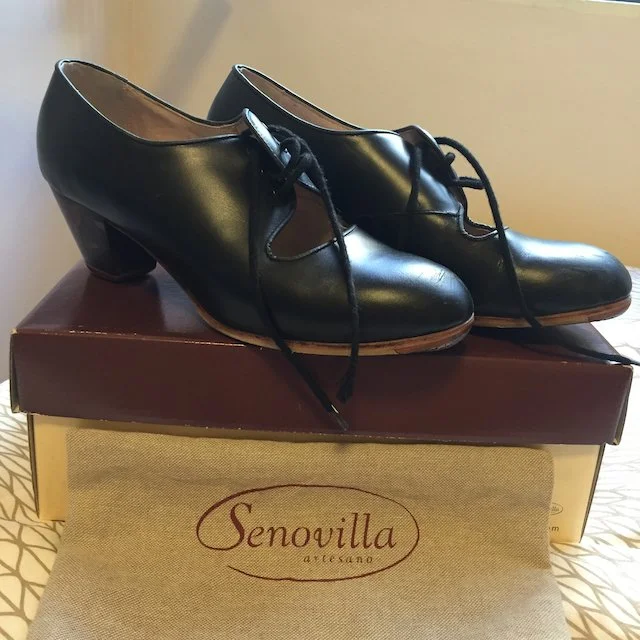
There is no Nike of flamenco shoes. Plenty of brands offer great quality, well-made flamenco shoes.
I do recommend buying a brand that is dedicated to flamenco shoes (not general dance footwear) and made in Spain. In the past I’ve worn shoes from Don Flamenco, Roberto Garrudo, Gallardo and Senovilla and been happy with all of them.
Different dancers have their favourites, so ask around and see what your teacher and other dancers recommend. They might be also be able to tell you the best place to buy.
Where to buy flamenco shoes
If possible, buy your flamenco shoes in person. The big brands have their own shops. If you know which brand you want you can go directly to them.
In Spain, especially in ‘flamenco cities’ like Seville, you will find dedicated flamenco stores that sell different brands. I’ve even bought flamenco shoes from a general shoe store in Seville.
While buying in person is ideal, buying online is sometimes the only option. In this case I’d go for an online store that does 100% flamenco products. I’d avoid generalised dance websites, and definitely avoid Amazon and Etsy as the options will be so much more limited and possibly not authentic.
You’ll get more choice in an online flamenco shop that stocks several brands. If you know what brand you want, buy from the maker’s website. In fact if you want to design your own shoes, you’ll need to order directly.
Wherever you choose to buy your shoes, check the photos and specifications thoroughly. Ideally there’ll be photos of the shoe from different angles, including the sole. Unfortunately not all the big brands do this. Check the fit as well. Some shops use codes like ‘A’ or ‘AA’ to denote wide-fit.
Always look at the the returns and delivery policies. Especially if you’re having your shoes custom made, you might not have the right to return them.
As a final check, visit the social pages and reviews of the brand or shop. Does everything check out? I’ve seen several complaints about non-delivery on the Facebook page of a big name flamenco shoe brand.
If you don’t know where to start, check out this list of flamenco stores from Flamenco Finder.
Another great option, especially for beginners, is to buy a secondhand pair of shoes. Check if your teacher is selling anything, or if there’s a Facebook buy/sell group that covers your area.
How to care for your flamenco shoes
Before you dance in your new shoes, break them in! Wear them around the house a couple of times so your feet can get comfortable. Definitely don’t save them to wear for the first time in your end of year show!
Will you wear stockings, socks or barefeet when you dance? I’ve seen all three. I like to wear very thin cotton socks that let my foot breath in class, and stockings for performance. If you do get sweaty feet then barefoot dancing is… just yuck. Flamenco shoes take a beating from the dancing, but in my experience sweat will damage a shoe faster than anything. Make sure you air your shoes to keep them fresh.
Keep an eye on the nails in your shoes. If you notice a nail coming loose then pull it out so it doesn’t scratch and damage the floor. I have never tried to have shoe repairs done outside of Spain, but I’ve done this in Seville. Cobblers in Spain can replace the nails and soles on your shoes.
Which flamenco shoes would I buy?
Here’s my deal. I’ve had two babies and my feet have widened. I’ve got bunions. I’m starting to sound like my late Nanna when I talk about footwear.
If I were to go and buy a pair of flamenco shoes tomorrow, I’d go for a 3cm cuban heel, brown leather with buckle. Not very exciting, I know. But that’s what I want.
You can have a lot of fun designing your shoe, and why not!?
Most importantly, a flamenco shoe should feel comfortable so that you can dance your best.
What would you choose? Let me know in the comments below.
New to flamenco? Find a flamenco class near you
FAQ
Do I need to buy flamenco shoes?
You don’t need flamenco shoes for your first flamenco dance class. In the beginning a pair of stable, closed toe dress shoes or boots will work. It’s important that they stay comfortable on your foot as you will move your foot around to make percussive sounds with different parts of the shoe hitting the ground. You can buy a pair of flamenco shoes after you’ve taken a few classes and you’re sure you want to continue.
How should flamenco shoes fit?
Flamenco shoes should be neither tight nor loose. They should fit comfortably, supporting the foot with no space for the foot to slide around. Check sizing before you buy as sizes do vary from brand to brand.