Everything you need to know about Seville’s Feria de Abril
The Feria is all about brightly coloured dresses and dancing Sevillanas. But what else goes on at Seville’s annual spring fair? Here we look at everything you need to know about the 2026 Feria de Abril.
Where and when is the Seville Fair?
This year’s Feria takes place from 21 to 26 April at the Recinto Ferial (showgrounds) in Los Remedios, Seville, Spain.
It’s a major event in the Seville social calendar: a week-long affair.
Traditionally it’s two weeks after Semana Santa, Seville’s Holy Week and Easter celebrations. It’s a chance for locals to come together, socialise and celebrate spring.
The main event takes place at showgrounds in Los Remedios, a suburb of Seville just next to Triana but it’s fair to say that the whole city is abuzz at this time of year!
What is the Feria all about?
The Feria has similar origins to Australian (or British or American) agricultural shows. In the beginning the event offered breeders a place to exhibit and compete cattle and other livestock. But everyone loves a party, right?! Inevitably the Feria drew crowds of people and it grew into a major social event.
Since the inaugural Feria in 1847, the annual event has gradually lost its agricultural side (with the exception of horse riding and bull fights) and has evolved into a week-long celebration.
The Feria takes place on dedicated showgrounds that are transformed into a mini-city.
The streets are decorated with colourful flags and lanterns and lined with more than 1,000 tents where guests eat, drink and dance.
Which tents are you allowed into?
Owning a caseta (tent) is an exclusive and expensive opportunity for Seville’s citizens. The majority of casetas are private and open only to members and their guests. If you’re lucky enough to score an invitation, consider it a privilege!
Although we say ‘tent’, the casetas are often elaborately furnished with bars, tables and dance floors. Each caseta has its own address with its street name and number.
Public tents
If you don’t have an invitation to a private caseta, don’t worry. There are casetas you can visit.
Some casetas are specifically open to the public. Look for those organised by the different neighbourhoods of Seville, unions or political parties.
The gateway to the Feria and how to get there
The gateway or portada to the Feria is an elaborate archway that lights-up the entrance to the show-grounds. It’s illuminated for the first time at midnight. Note, this is midnight Monday, before the first full day of the Feria!
Having your photo taken in front of the portada is a Feria must-do!

The portada changes each year to celebrate a different Seville landmark. In 2026 it’s inspired by the Pabellón de Portugal building.
The portada is accessible from Avenida Flota de Indias in the Los Remedios neighbourhood, but in fact there are multiple entrances to the Feria. Seville is relatively small and walkable, so chances are you will able to arrive on foot. If not, consider taking the metro to Plaza de Cuba or Parque de los Principes and walking from there. It's also possible to take the bus. For further information on public transport in Seville visit Tussam.
What to wear
There’s no dress-code, but people definitely ‘frock-up’ for the Feria.
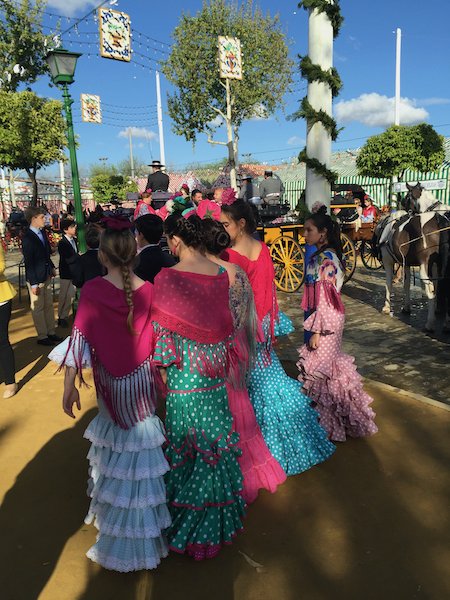
For women this means bright and colourful flamenco dresses with matching flowers in your hair. It’s a look that has evolved from the traditional dresses worn since the Feria began, but styled these days with far more colour and accessories… and a much higher price tag!
Tips:
Feria dresses are for show! They’re usually completely unsuitable for flamenco dancing as they are too restrictive.
Whatever you wear, don’t forget to think about your feet! The streets of the Feria aren’t exactly clean and you will probably be on your feet a long time, so make sure you choose shoes that can go the distance.
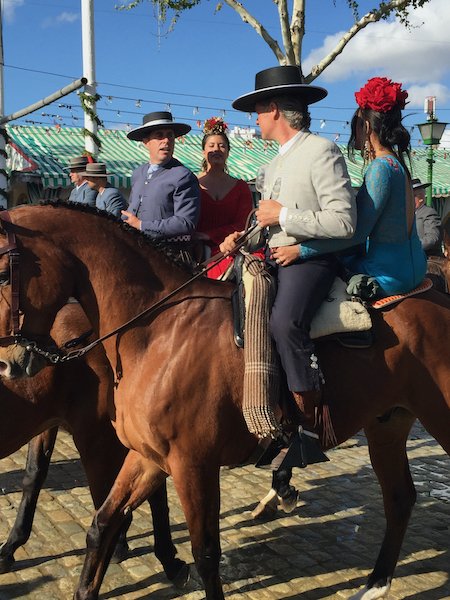
The traditional dress for men is a short-waisted suit and wide brimmed hat. It’s typically worn for horse riding and carriage driving, and isn’t as ubiquitous as the flamenco dress.
Many men, and some women too, prefer to wear ‘regular’ going-out clothes.
Whether you choose to go casual or fancy, part of the fun of the Feria is enjoying the fashions on show.
What happens at the Feria?
Aside from people-watching, what else can you enjoy at the Feria?
Horse riding and bullfighting
Part of the flair of the Feria is the Paseo de Caballos or horses and carriages that come and go. The horse carriages are beautifully decorated and even the horses have flowers in their hair. They make quite a postcard picture and are all part of the spectacle.
If you’re interested in the bullfighting, you will need to buy tickets. Bullfighting has been part of the Feria since the beginning and takes place outside of the showgrounds at Seville’s Plaza de Toros. Bullfights are held every day of the Feria.
Amusements — La Calle del Infierno
Known as La Calle del Infierno (Hell Street) this part of the Feria has all the attractions you’d see at any typical fair. Think Ferris wheel, rollercoasters and sideshows. If you’re visiting the Feria with kids you will probably want to take them to La Calle del Infierno, which actually occupies quite a significant part of the showgrounds.
Food and drink
Hungry? Tents at the Feria offer typical Spanish tapas. (You can expect to pay a little more than you would elsewhere.)
Traditionally the first day of the Feria is celebrated by tent owners and their families with a special dinner of pescaíto frito (fried fish). You will see it served throughout the Feria as well as other typical Andalusian tapas: jamón, cheese, montadito sandwiches and so on.
Outside the tents you can also purchase typical fairground foods: fairy-floss or cotton candy, donuts and of course, churros.
At the bars inside the casetas you can indulge in a rebujito. This is the typical drink of the Feria and is a delicious mix of manzanilla sherry and lemonade. Make sure you have some food in your stomach before you drink too many! You can also buy beer and soft-drinks as well as some spirits.
Music and dancing
Inside each caseta you are bound to find a dance floor. Tent owners may host professional flamenco dancers during the week, or may pay a flamenco guitarist and singer to provide music for their guests.
Recorded music is just as common. You can hear anything from Sevillanas and flamenco to reggaeton. Later in the night you could be forgiven for thinking you were in a nightclub. The locals LOVE to dance. The Feria is a giant party, after all!
Las Sevillanas
This iconic folk dance of Seville is another Feria must-do!
Sevillanas is folk music sung in four verses and usually danced with a partner. Each verse is danced with a slight variation. It’s relatively simple and you will see it everywhere around the Feria.
If you’re planning on going and aren’t familiar with Sevillanas then you might want to take a couple of classes first. There are endless opportunities for dancing Sevillanas every day of the week during Feria!